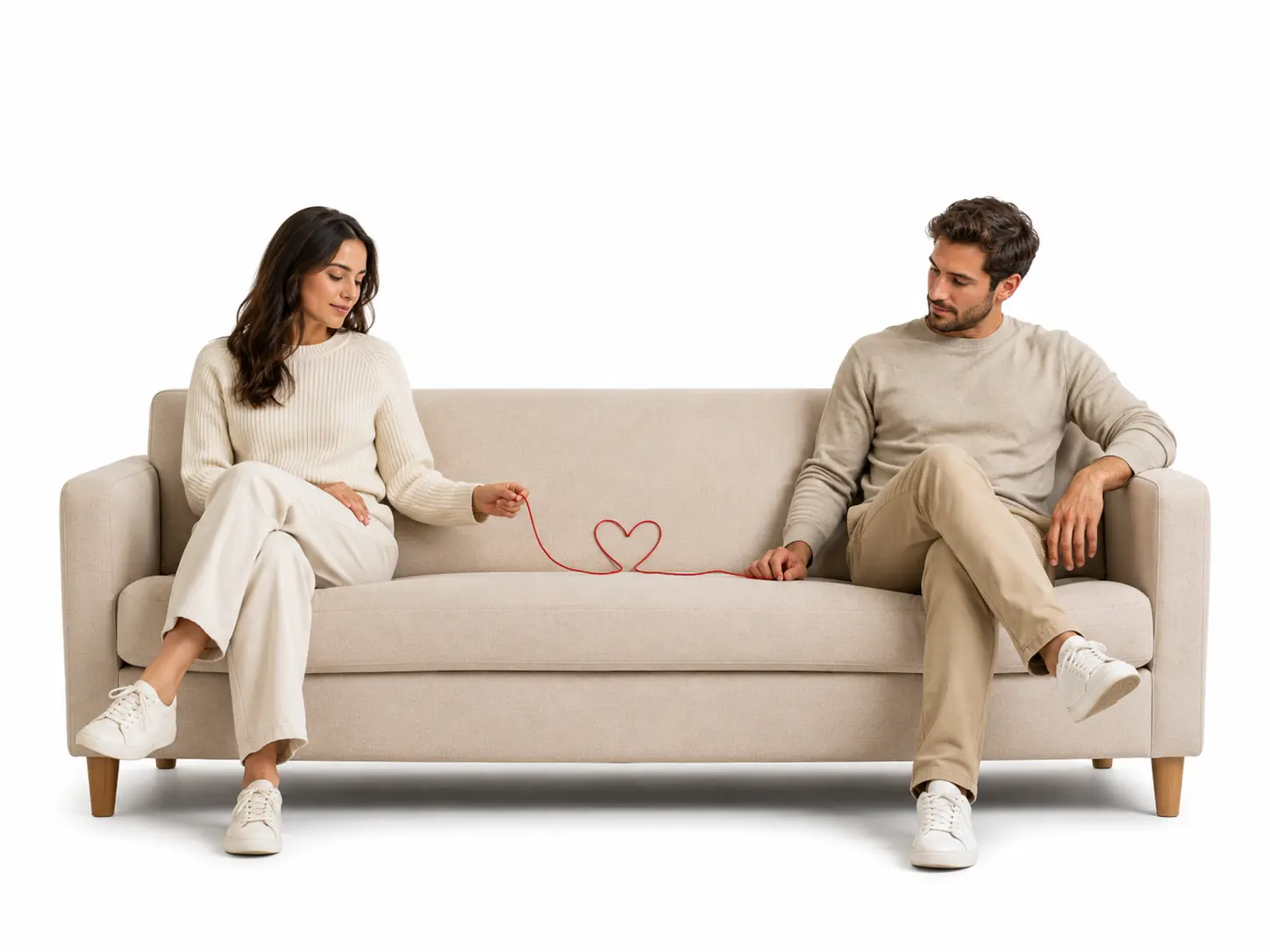
Does Your Crush Like You Back?
Take the free quiz and find out.

Find the relationship pattern behind how you love, communicate, decide, and connect.
Answer 28 relationship scenarios and get one of 16 love personality results. The quiz maps social energy, information style, decision style, and relationship rhythm so you can use the result in real conversations, not as a fixed label.

Choose the answer that sounds like the repeated pattern, not the answer you wish were true.
No login required. Your answers stay in this browser session.
Questions Overview
This free quiz uses 28 relationship scenarios. Choose the answer that matches the repeated pattern, not the answer that feels most hopeful in one moment.
Your result reads consistency, repair, emotional safety, direct communication, and the gap between chemistry and reliable love.
More relationship quizzes
Credit access
Go deeper than a result preview with complete reports, saved history, and premium relationship games.
Standard quizzes and games cost 1 credit
Premium quizzes and games cost 2 credits
Individual plans include monthly or annual credits
Duo plans share 3x individual credits
Yes. You can answer all 28 questions and read your result for free.
No. It is a relationship self-reflection quiz inspired by four common personality-style dimensions. It is not a clinical or official personality assessment.
The quiz combines four dimensions into a love personality pattern, which creates 16 possible result types.
Yes, if it helps start a calm conversation about how each of you communicates, plans, repairs, and feels loved.
Each answer adds to one side of four relationship dimensions: outward or inward energy, big-picture or concrete information, heart-led or logic-led decisions, and structured or flexible rhythm.
Your type describes a repeated love pattern: how you open up, read signals, handle conflict, choose closeness, and decide whether a relationship feels safe enough to continue.
Treat the result as a conversation starter. It can help you explain what kind of love feels natural to you, but it should not become a fixed label or an excuse to stop growing.
Quiz guide
A love personality quiz is most useful when it turns abstract personality language into real relationship behavior. Instead of asking whether you are romantic enough, it looks at how you restore energy, read signals, make decisions, and move through structure or spontaneity in love.
Some people build intimacy by talking, sharing, and moving toward external connection. Others need quiet space before they can open. Neither pattern is better. The important question is whether your partner understands how you return to yourself after stress.
Big-picture lovers often notice meaning, potential, and emotional subtext. Concrete lovers usually trust repeated behavior, direct evidence, and practical reality. Relationship confusion often grows when one person talks about possibility while the other asks for proof.
Heart-led decision makers often protect tone, emotional impact, and relational care. Logic-led decision makers often protect truth, fairness, and directness. When both styles are respected, conflict becomes clearer instead of cruel.
Structured lovers often feel safer with plans, timing, and clear expectations. Flexible lovers often feel safer when the relationship can breathe and change. A healthy relationship does not require identical rhythm, but it does require honest translation.
This quiz uses four personality-style dimensions as a self-reflection framework for relationships. It is not an official MBTI assessment, a diagnosis, or a rule for who you should date.
Use the result to name what helps you feel safe, seen, and free. Then compare it with real behavior: how you repair conflict, ask for closeness, keep boundaries, and choose the next honest conversation.
Use your result to name what kind of love helps you feel safe, seen, and free. Then compare the insight with real behavior, not just personality labels.
Keep exploring
These sources help frame attachment, communication, emotional bids, and self-compassion. They support reflective relationship education; this quiz is not a clinical assessment.