

Where Do You Like Your Boyfriend to Kiss You?
A playful kiss quiz for couples where tender, romantic, and flirty boyfriend kiss preferences compete until one favorite affection style wins.
Start Playing in 3 Steps
Make one matchup choice at a time until the bracket produces a clear winner.
- 1
Start
Open the kiss quiz bracket with sixteen boyfriend kiss preferences.
- 2
Choose
Pick the option that feels sweeter, softer, or more romantic in each matchup.
- 3
Finish
Keep going until one affectionate preference wins.
- 4
Talk
Use the winner as a gentle conversation starter about comfort, timing, and consent.

16 options enter.

Cheek kiss

Neck kiss

Nose kiss

Hand kiss

Lip kiss

Top-of-head kiss

Shoulder kiss

Wrist kiss

Collarbone kiss

Temple kiss

Ear kiss

Eyelid kiss

Palm kiss

Jawline kiss

Upper-back kiss
What is Where Do You Like Your Boyfriend to Kiss You?
It is a playful kiss quiz for couples that compares sixteen boyfriend kiss preferences until one affectionate style wins.
The game is built for light reflection, not diagnosis. Each choice asks which kind of affection would feel sweeter, softer, or more romantic in a real relationship moment.
The final winner can hint at whether you are drawn toward comfort, playfulness, romance, chemistry, or steady reassurance.
Why it works for couples
The bracket makes affection easier to talk about because each round gives both people a small, concrete choice instead of a vague question.
Couples often know whether something feels sweet, awkward, too intense, or comforting before they can explain why. This game turns that instinct into a simple comparison.
Because the game is playful, it can open a softer conversation about comfort and boundaries without making either person feel tested.
- Compare one choice at a time.
- Notice comfort before intensity.
- Use the winner as a conversation opener.
How the gameplay works
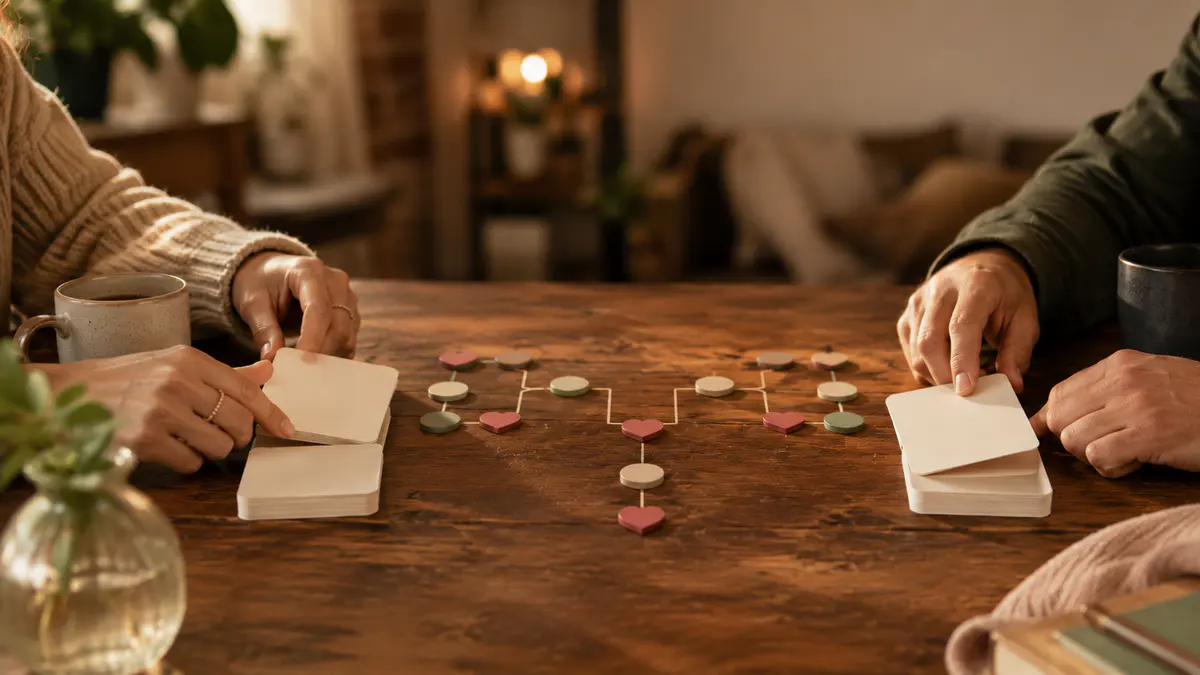
Sixteen kiss options enter the bracket, and you choose between two at a time until one boyfriend kiss preference survives.
Every matchup asks for your first honest preference. There is no score, no right answer, and no hidden personality label behind the result.
When an option wins, it advances to the next round. The final champion is simply the affection style that felt most appealing during this playthrough.
How to read your winning kiss
Read the winner as a small signal about the kind of closeness that feels good today, not as proof of what you always need.
A forehead, temple, or top-of-head winner may point toward safety and reassurance. A nose or cheek winner may point toward playfulness and lightness.
A jawline, ear, collarbone, or neck winner should still be filtered through comfort, timing, and consent because chemistry only works when both people want it.
When to play
Play when you want a warm couple activity, a flirty conversation starter, or a low-pressure kiss quiz for couples.
It works well before date night, during a quiet evening together, or when you want to compare what feels romantic without turning the conversation heavy.
Skip or replay any matchup that feels too intense. The game should make comfort easier to name, not create pressure to perform a preference.
What you can take away
The best takeaway is language for what feels caring, romantic, playful, or too intense in a real relationship moment.
Use the final winner to say something specific, such as which kinds of affection feel soothing, which feel playful, and which need more trust first.
The game can also reveal a boundary. If an option keeps losing because it would feel uncomfortable, that is useful information too.
Who Caleb Merridan is for
Most relationship confusion does not need a verdict from a relationship coach who barely knows you. Caleb Merridan gives you private tools to slow down, see the pattern, and choose your next step yourself.

New couples building closeness
For people who want an easy way to learn each other's habits, preferences, and small emotional details before the relationship feels too serious.

Long-distance or stuck conversations
For couples who need a lighter way to restart a call, check in after distance, or move past the same conversation loop.

Singles reading relationship signals
For people in a crush, situationship, or early dating stage who want to notice patterns without spiraling over one message.
Why I built Caleb Merridan
I started with relationship advice.
At first, I thought people needed sharper answers. Is this a red flag? Does he care? Should I stay patient, say something, pull back, or finally stop explaining?
But after seeing the same questions again and again, I started to notice something else.
Most people were not looking for someone to take over their love life. They were looking for a way to think clearly before they made the next move.
Formal counseling can be valuable, but a lot of people are not ready for it. It can feel too expensive, too serious, too exposed, or simply too far away from the small moments where confusion actually happens.
And many people do not want another stranger giving them a verdict.
They want privacy. They want language. They want a way to look at the pattern without being pushed into a performance of healing.
That is why Caleb Merridan became more than articles.
I wanted to build a place where relationship questions could become small, usable tools: a quiz that names the pattern, a game that helps two people compare answers, a guide that gives words to something hard to say.
Not consulting. Not a diagnosis. Not a dramatic answer.
Just a calmer way to understand what is happening, and one useful next step you can actually take.
Ideas People Kept Coming Back To
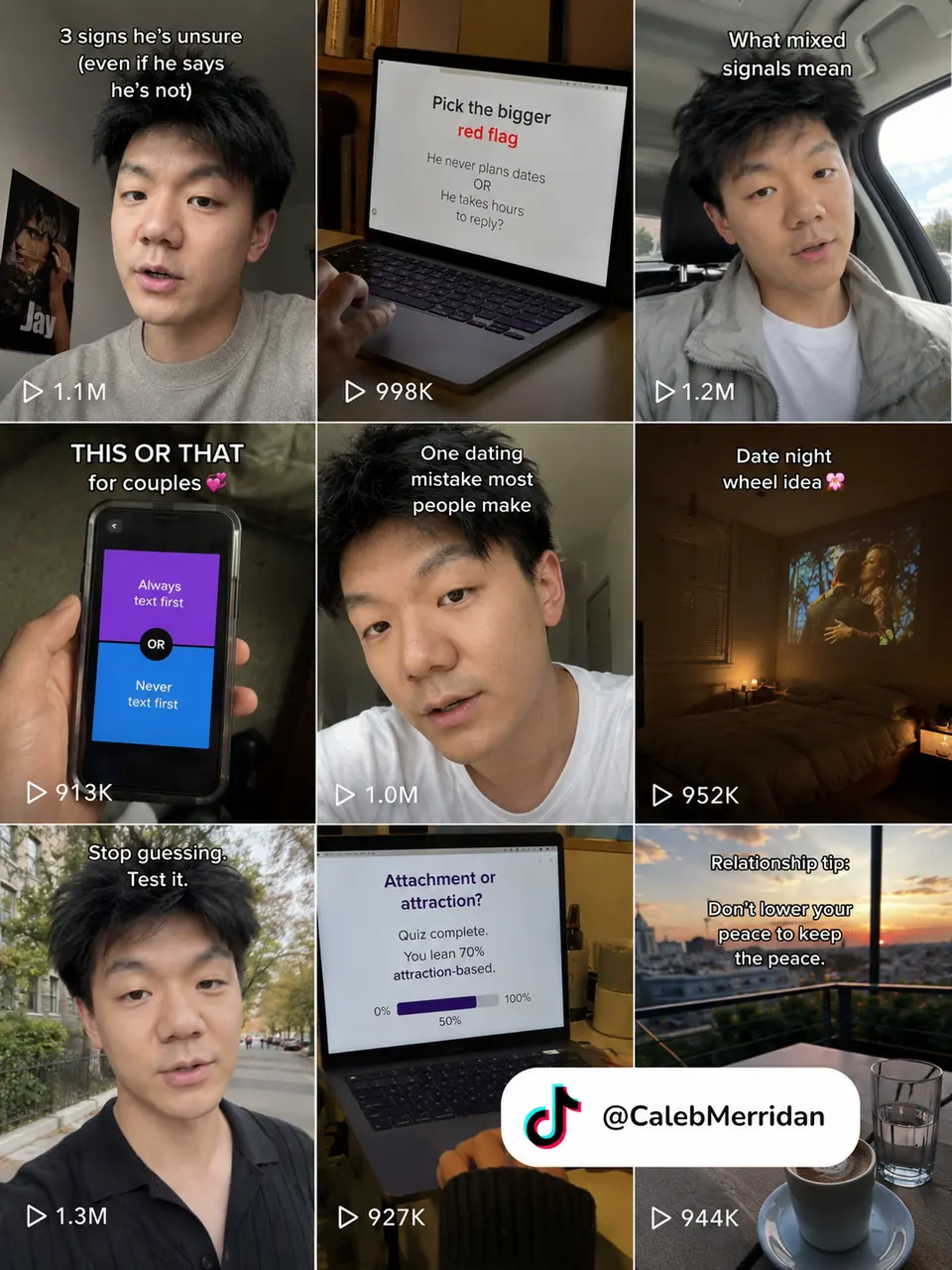
Before Caleb Merridan became a library of quizzes and games, I was already sharing relationship ideas through short videos, carousel posts, and simple advice content.
The same topics kept coming back.
Mixed signals. Anxious waiting. Boring date nights. Friends who feel like more. Hard conversations that never start. The strange feeling of knowing something is off, but not knowing how to name it.
People saved those posts because they recognized themselves in them.
They shared them because someone else needed the words too.
Sometimes a short idea did more than explain a feeling. It gave someone a way to finally ask, "Is this happening to us?"
That response shaped the website.
Caleb Merridan is built from the questions people kept returning to. The ones that were too personal for a comment section, too small for therapy, but too important to ignore.
So the ideas became tools.
Quizzes to organize the pattern. Games to make the conversation easier to start. Guides to turn an unclear feeling into something you can say without making everything heavier.
User Feedback Themes
People usually come here for one small question. They stay when the question turns into a clearer conversation.
"It helped us talk without making it a big thing."
We started with a game because it felt easy. Then one answer surprised us, and suddenly we were talking about something we had both been avoiding.
"I stopped replaying the same moment."
The quiz did not tell me what to do. It helped me see why I was reacting so strongly, and what pattern I was actually afraid of.
"It felt lighter than asking everyone for advice."
I liked that I could use it privately first. By the time I brought it up, I had better words and less panic.
Play next

Frequently Asked Questions
Is this a serious relationship test?
No. It is a playful kiss quiz for couples. Treat the winner as a conversation starter, not a diagnosis, compatibility score, or rule for your relationship.
Can I play this with my boyfriend?
Yes. You can play alone first, then compare answers together and talk about which kinds of affection feel sweet, comfortable, or better saved for another moment.
What if one option feels too intense?
Skip, replay, or choose the calmer option. The point is mutual comfort and clearer language, not pressure to like every kind of kiss.
Does the final winner prove what I need?
No. It only shows what felt most appealing during this round. Real intimacy still depends on respect, timing, and consent.