
Back to blog
The Fight Under the Fight in a Relationship
Key takeaways
- A support guide for translating repeated relationship fights into the deeper fear, impact, and repair pattern underneath.
- The clearest signal is usually the repeated pattern, not one good day or one bad conversation.
- Repair works best when both people can name the pattern and change one visible habit.
- Use the next step to create structure, not to chase reassurance.
A support guide for translating repeated relationship fights into the deeper fear, impact, and repair pattern underneath.
Some couples are not having ten different fights.
They are having one fight wearing ten different outfits.
The dishes. The phone. The tone. The calendar. The late reply. The forgotten errand. The weekend plan. Each argument looks separate on the surface, but underneath it, the same emotional question keeps asking to be answered.
Until you find that question, the topic will keep changing and the loop will keep returning. The goal of this page is not to compete with a broader guide on how to stop arguing in a relationship. It is narrower: how to translate the fight that keeps coming back, so the next repair is aimed at the pattern instead of the latest costume.
Use this as a support guide after the argument has cooled down. If the fight is still live, heated, or unsafe, start with the broader stop-arguing guide first. This page is for the quieter moment when you can ask, "Why did this topic hit the same nerve again?"
The short answer

The fight under the fight is the repeated emotional question hiding beneath changing surface topics.
One week it sounds like dishes. The next week it sounds like texting. Then it becomes tone, money, plans, chores, family, intimacy, or why someone did not seem excited enough. The topic changes, but the nervous system recognizes the same old meaning:
- I do not matter.
- I am alone in this.
- I cannot trust you with what I need.
- I will be punished for disappointing you.
- I have to protect myself before you hear me.
That does not make every conflict imaginary. The surface topic may still need action. But if the same fear keeps borrowing new subjects, solving only the subject will not end the loop.
Why the surface topic keeps changing

Surface topics are easier to argue about because they look concrete.
Who did what? Who forgot? Who sounded rude? Who should have planned earlier? Who is right about the practical detail?
Those details may matter. But couples often get stuck because the detail becomes a proxy for something more vulnerable.
The real fear might be:
- Do I matter to you?
- Can I trust you to think about us?
- Am I alone in carrying this relationship?
- Will you still be kind when I disappoint you?
- Is it safe to need something from you?
That is the fight under the fight.
A review of communication during conflict in intimate relationships shows that conflict cannot be judged only by whether it sounds positive or negative. Directness, cooperation, timing, and whether the problem can actually improve all matter. That is why the repeated fight deserves translation, not just blame.
What the fight is really asking
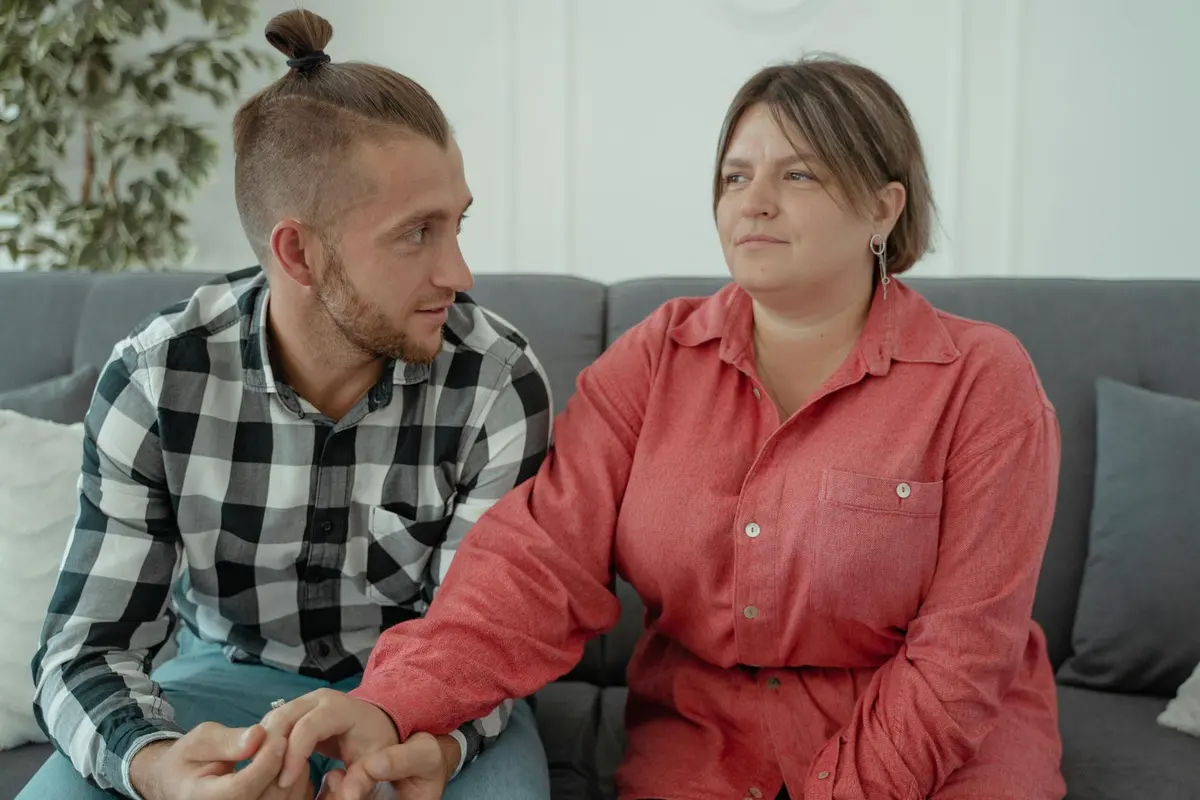
The fastest way to find the deeper question is to stop asking, "Who is right about this detail?" for a moment and ask, "What did this detail come to mean?"
| Surface fight | Hidden question | Repair to try |
|---|---|---|
| You were on your phone at dinner. | Am I still interesting to you? | Put the phone away and name the desire for attention without mockery. |
| You changed the plan again. | Can I trust you to think about us? | Acknowledge the disruption, then make the next plan more specific. |
| You got quiet after I brought something up. | Are you leaving emotionally? | Say whether you need a pause or whether you are shutting down. |
| You criticized the way I did it. | Am I always failing with you? | Separate the request from the person's worth. |
| You forgot something small again. | Am I carrying this alone? | Repair the missed task and discuss the larger load. |
This is why a practical disagreement can suddenly feel enormous. The practical detail is real, but the meaning attached to it is doing most of the emotional work.
The Gottman Institute's distinction between managing and resolving conflict is useful here because not every recurring conflict disappears forever. Some differences are managed through better rituals, language, repair, and accountability.
The clue: intensity outgrows the event

A recurring conflict often reveals itself when the reaction feels bigger than the event.
A forgotten errand turns into a conversation about respect. A delayed text turns into a panic about abandonment. A tone issue turns into a full argument about whether the relationship is safe.
This does not mean someone is irrational. It means the current moment is touching an older or repeated meaning.
The mistake is to debate the surface while ignoring the meaning.
If the issue is not only recurring conflict but repeated confusion about someone's interest, inconsistency, or hot-and-cold behavior, read how to deal with mixed signals from a guy. Mixed signals and repeated fights are different problems, but both require you to look at patterns rather than one dramatic moment.
How to talk about the fight under the fight

Do not try to do this in the hottest minute of the argument. Use the language after both people have enough calm to hear something more accurate than blame.
After the argument settles, each person can finish this sentence:
When that happened, the story I started telling myself was...
This sentence is useful because it separates the event from the interpretation.
For example:
- When you checked your phone during dinner, the story I told myself was that I am boring to you.
- When you questioned the plan, the story I told myself was that I can never do enough correctly.
- When you got quiet, the story I told myself was that you were pulling away.
Now the couple has something real to work with.
Then ask the second sentence:
What I needed in that moment was...
The answer may be reassurance, follow-through, a softer tone, shared planning, a pause, a repair, or concrete changed behavior. The point is to move from prosecution to translation.
Name impact before motive
One of the fastest ways to make conflict unsafe is to declare the other person's motive.
You do not care. You were trying to embarrass me. You always want control. You just wanted to punish me.
Maybe there is a real pattern underneath. But motive accusations usually create defense before understanding.
Try naming impact first:
- That landed as dismissal.
- I felt alone in the decision.
- I started to feel like I had to protect myself.
- I felt unimportant in that moment.
Impact language keeps the door open longer.
The Gottman Institute's conflict-management skills are helpful because they treat conflict as something couples can handle with specific habits, not as proof that the relationship has failed.
That distinction matters for this page's SEO role too. A searcher who wants a live argument reset should land on the stop-arguing page. A reader who keeps seeing the same emotional pattern after different arguments belongs here.
Change the first sentence
Recurring fights often have recurring opening lines.
You always...
Why did you...
I cannot believe you...
Here we go again...
By the time those sentences arrive, both nervous systems know the script.
Try replacing the first defensive sentence with the vulnerable one:
Not: You never listen.
Try: I am scared I do not matter when I have to repeat this.
Not: You are so controlling.
Try: I feel like I am failing before I understand what you need.
Not: You do not care about this relationship.
Try: I feel alone in protecting our closeness right now.
The vulnerable sentence is not weaker. It is more accurate.
If the argument is already escalating and you need a step-by-step reset, use the broader stop-arguing guide instead. This page is for the slower work afterward: naming why the same argument keeps finding new material.
Repair the pattern, not only the episode
After the immediate argument, ask:
- What was the surface topic?
- What was the deeper fear?
- What did each person do that made the loop worse?
- What is one earlier signal we can notice next time?
- What repair would help this specific fear feel less true?
This is relationship maintenance at the conflict level. You are not only apologizing for one fight. You are learning the architecture of the loop.
If the repair conversation reveals that the conflict is about skills, tone, and timing, Healthy Arguments in Relationships is the better next read. If the fight exposed damaged trust or repeated harm, start with how to repair a relationship instead of trying to solve it with one clever sentence.
When the loop needs accountability
Sometimes the fight keeps repeating because one person is asking for a basic change and the other keeps minimizing it.
In that case, do not over-psychologize the conflict. A deeper fear may exist, but so may a concrete unmet need.
Patterns still require accountability.
A useful repair includes both:
- I understand why this hits you there.
- I also see the behavior I need to change.
Insight without changed behavior becomes another loop.
This matters because not every repeated fight is a communication puzzle. Sometimes it is a pattern of dismissal, control, fear, contempt, or broken promises. One Love's guide to handling conflict in a relationship is useful for separating normal conflict from patterns that are becoming unsafe or controlling.
A simple repair script
Use this when the argument is over but the pattern is still clear:
I do not want to keep having the same fight in a new outfit. The surface topic was [topic]. The deeper meaning for me was [fear/story]. My part in the loop was [my behavior]. What I need next time is [specific request]. What I am willing to do differently is [specific action].
For example:
I do not want to keep having the same fight in a new outfit. The surface topic was the weekend plan. The deeper meaning for me was that I felt alone in carrying our relationship. My part in the loop was opening with criticism instead of saying I felt tired. What I need next time is a clearer plan by Thursday. What I am willing to do differently is ask for that directly instead of testing whether you remember.
This script works because it does not erase the behavior. It adds meaning, ownership, and a next step.
The goal
The goal is not to never fight.
The goal is to stop letting the same fear hijack every topic.
When couples can name the fight under the fight, conflict becomes less mysterious. The dishes can become dishes again. The phone can become a phone again. The tone can become something to repair instead of proof that love is unsafe.
The surface matters. But the root is what keeps calling you back.
FAQ
Why do we keep having the same fight?
Usually because the surface issue has become attached to a deeper meaning. The topic may be chores, texting, money, tone, sex, or plans, but the deeper question may be about mattering, trust, effort, safety, or whether one person feels alone in the relationship.
Is the fight under the fight always emotional?
No. Sometimes it is emotional. Sometimes it is practical. Often it is both. A deeper fear may explain why something hurts, but it does not replace the need for changed behavior.
How do you talk about a recurring argument without starting it again?
Wait until the argument has cooled down, then separate the event from the story you told yourself. Start with impact rather than motive. Say, "When that happened, the story I told myself was..." before you ask for a specific change.
When should we stop trying to repair the pattern?
If one person repeatedly minimizes the issue, refuses accountability, uses fear or control, or turns every repair attempt into blame, the problem may be bigger than communication. In that case, focus on safety, support, and clear boundaries before trying another conversation technique.
A final note
A relationship usually improves through small repeatable repairs rather than one perfect conversation.
Related Articles

Contempt in a Relationship: Signs, Examples, and What to Do

Love Hurts Quotes for Heartbreak, Healing, and Choosing Yourself

Clingy Girlfriend: Signs, Meaning, and What to Do

Why Is My Boyfriend So Mean to Me? Signs and What to Do

May-December Relationship: What It Means and When an Age Gap Can Work

Should We Break Up Quiz: 12 Questions for a Clearer Decision